
As the holiday season approaches, porcelain Christmas dinner plates become one of the most popular items for festive dining. Their bright colors, winter motifs, and decorative patterns bring instant cheer to the table. But many consumers-especially families with children-share the same question:
Are Christmas-themed porcelain plates really safe for daily use?
This guide explains everything you need to know about glaze safety, firing temperature, and international food-contact standards.
Whether you are preparing your holiday table or looking for reliable porcelain products, the following insights will help you make informed decisions.

Why Safety Matters for porcelain christmas dinnerware
Ceramic christmas dessert plates often feature vibrant designs-red berries, Santa motifs, snowflakes, and gold accents-which leads many buyers to ask:
- Will the colors fade into food?
- Are the glazes lead-free?
- Are printed decals safe when heated?
- Can they safely go into microwaves or dishwashers?
These concerns are completely valid. Truly food-safe porcelain dinnerware must meet strict requirements for materials, glazing, and firing.
Understanding Glaze Safety: What "Lead-Free" Really Means
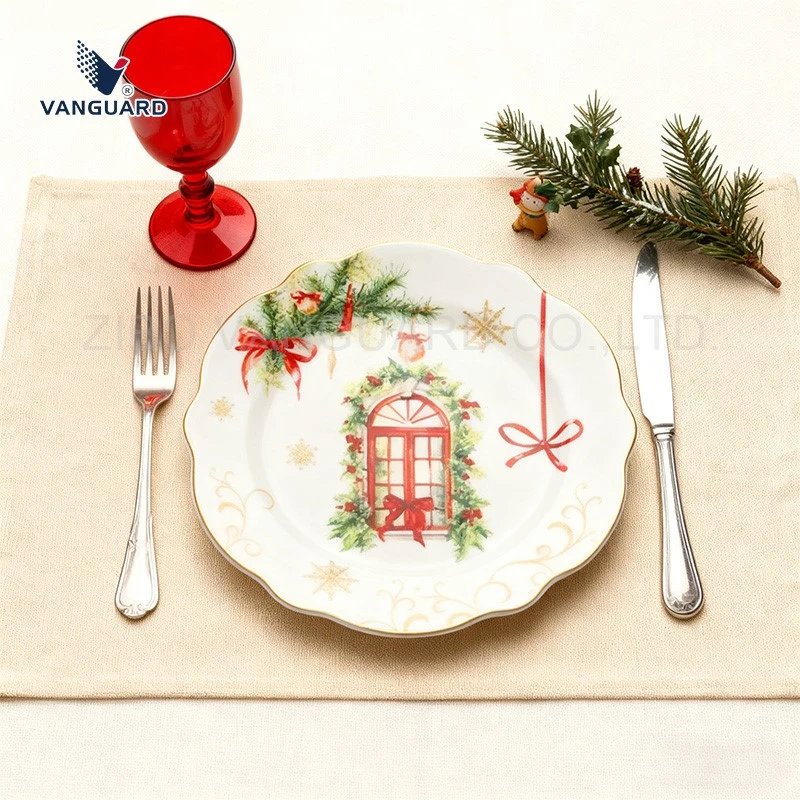
The glaze is the glossy coating applied to the porcelain surface. For porcelain Christmas dinner plates, the glaze must be:
-
Lead-free and cadmium-free
These heavy metals affect color stability but pose health risks if improperly used. Reputable manufacturers today use food-safe glazes compliant with FDA and LFGB standards.
-
High-temperature stable
A safe glaze must withstand 1,200–1,300°C firing. At this temperature, the glaze and porcelain body fuse permanently, creating a non-porous, chemically stable surface.
-
Resistant to acidic foods
Christmas meals often include tomato sauces, wine reductions, cranberry dishes, and citrus desserts. Quality glazes prevent color leaching even under acidity.
The Role of Firing Temperature in Product Safety
The firing temperature determines the strength, durability, and chemical stability of porcelain.
High firing (1,200–1,300°C) ensures:
- Vitrification: the plate becomes non-porous, preventing bacteria absorption
- Stable color decals: patterns bond firmly into the glaze layer
- Thermal resistance: safe for microwaves, ovens, and dishwashers
- Greater chip resistance: important during holiday gatherings with frequent dish handling
Low firing (under 1,000°C)-commonly used in cheaper seasonal products-may result in:
- weaker glaze bonding
- faster color fading
- potential glaze migration
- reduced durability
This is why choosing high-fired porcelain, rather than low-fired decorative ware, is essential for Christmas table safety.

What Makes Christmas-Themed Decals Food-Safe?
Holiday porcelain plates often feature snowflakes, holly leaves, Santa Claus, reindeer, and red-and-green patterns. These illustrations are typically applied using decal printing, and their safety depends on two factors:
1. Food-grade pigments
Only non-toxic pigments approved for food-contact use should be used.
2. High-temperature decal firing
When decals are re-fired at around 780–850°C, they fuse into the glaze, ensuring:
- no peeling or scratching
- no color migration into food
- long-term dishwasher resistance
This distinguishes genuine tableware from "for decorative use only" plates found on the market.
Food Safety Standards to Look For
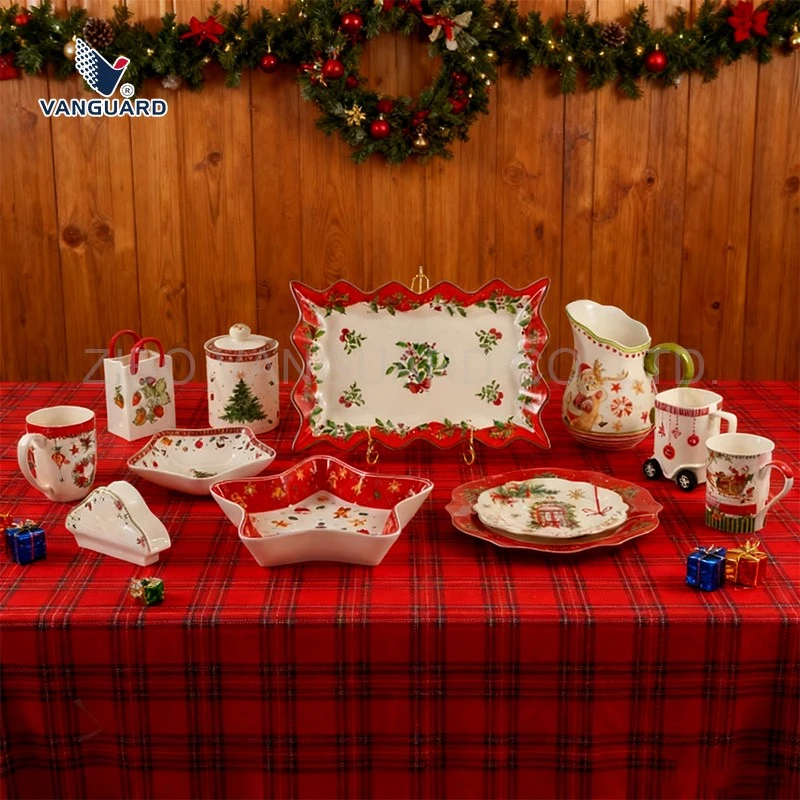
When shopping for Christmas porcelain dinner plates-especially online-confirm that they meet at least one of the following:
- FDA – U.S. food-contact safety
- LFGB – German/European standard, among the strictest worldwide
- California Proposition 65 – regulates heavy metals and chemical exposure
- Dishwasher & Microwave Safety Testing – confirms durability for daily use
These certifications ensure safety not only during Christmas, but throughout the year.
What Customers Really Want: Safety + Style
Holiday buyers typically look for:
- festive designs that elevate table decor
- durable porcelain suitable for repeated use
- safe materials for children and guests
- microwave and dishwasher convenience
- color stability and scratch resistance
High-quality porcelain Christmas dinner plate excel in both appearance and safety, distinguishing them from cheaper seasonal alternatives.
A Real Example: How Premium Christmas Porcelain Plates Are Made
At ZIBO VANGUARD CO., LTD,our Porcelain Christmas Dinner Plate-follow a strict manufacturing process:
- precision molding for consistent shape and weight
- bisque firing to strengthen the clay body
- application of food-grade glaze
- high-temperature firing at 1,250°C
- application of Christmas-themed decals
- second decal firing at 800–850°C
- comprehensive QC including heavy metal testing, dishwasher simulation tests, and surface inspection
The result is a plate that is:
- food-safe
- durable
- fade-resistant
- fully functional for microwaves, ovens, and dishwashers
- visually appealing for any Christmas table setting
Because safety is essential-especially during family holiday meals.

How to Judge the Quality of porcelain christmas dinnerware
When purchasing, observe the following aspects:
- Is the plate flat and free from deformation?
- Is the pattern clear and free of impurities?
- Is the glaze smooth and free of pinholes?
- Does it produce a crisp sound when tapped (indicating higher-quality porcelain)?
- Is it produced by a reliable supplier with strong manufacturing capability?
ZIBO VANGUARD operates its own 80,000㎡ factory with 9 specialized workshops and a complete QC system. Every product undergoes strict inspection.
Porcelain Christmas dinner plates can be completely safe-provided they are made with food-safe glazes, high-temperature firing, and internationally certified materials. When manufactured correctly, they are more than decorative items; they are durable, functional tableware that enhances holiday gatherings year after year.
If you are looking for safe, beautifully designed, and high-quality options, the Porcelain Christmas Dinner Plate from our collection showcases festive craftsmanship backed by strict food-contact standards and advanced ceramic production.
A safer holiday table starts with choosing the right porcelain.