

Glaze is the beautiful outer layer of ceramics, some are simple and some are colorful. As a kind of glassy layer on the surface of ceramics, it has low water absorption, stable chemical properties, and high glaze hardness, which makes the ceramics durable, easy to wash and keep clean, and resistant to acid, alkali, and salt corrosion.
It is precisely because the glaze layer plays such an important role that the glazing process has been an indispensable part of the porcelain making process from ancient times to the present!

There are many types of ceramic glazes. According to the composition of the glaze, it can be divided into lime glaze, feldspar glaze, etc.; according to the firing temperature, it can be divided into high-temperature glaze and low-temperature glaze; according to the appearance characteristics after firing, it can be divided into transparent glaze, opalescent glaze, colored glaze, glossy glaze, matte glaze, crystal glaze, glass glaze, crackle glaze, kiln-changed glaze, etc.; and there are also many glazing methods, such as dipping glaze, pouring glaze, spraying glaze, swinging glaze, brushing glaze, etc.
Dipping glaze
Dip glaze has the advantages of saving time and easy operation. There are two types of glazing: immersing the whole body of the vessel in the glaze tank and glazing the outer glaze of the vessel. Full-body dipping glaze is generally suitable for glazing small objects. These small objects are easier to grasp and control, so dipping glaze once is enough. However, large works are different. It should be noted that the glazing procedure for large objects is to apply the inner glaze first and then the outer glaze. Because once the glaze layer is adsorbed on the object, it will quickly dry into powder and cannot be touched again, otherwise the glaze layer will be destroyed and deglazing will occur after firing. Before applying the outer glaze, you need to make sure that the inner glaze is basically dry, so that the object will become absorbent again and fully absorb the glaze slurry.

When the inner glaze is dry, the craftsman holds the appropriate part of the vessel with both hands, first rinses the bottom of the vessel in a basin of clean water to reduce excessive glaze absorption at the bottom, and then presses the entire vessel into the glaze tank with force. During the pressing and dipping process, pay attention to keep the glaze slurry surface level with the mouth of the vessel, and do not let the glaze slurry overflow the edge of the vessel and flow into the vessel to cause uneven glazing.
Glaze dipping is a continuous process. The dipping time is determined according to the size and thickness of the object. It usually takes 10 to 20 seconds or even longer. When the dipping is completed, take the object out and try to turn it to allow it to absorb the glaze evenly. This completes the dipping procedure.
swinging glaze

Swinging glaze refers to a method of glazing the inside of the vessel (called "inner glaze"), which is usually used for deep-bellied and small-mouthed vessels such as jars, bottles, and urns (bowls, plates, dishes, etc. with larger openings can be dipped in glaze at one time). The method is to use a spoon to inject the glaze slurry into the vessel, filling about half of the space inside the vessel, and then lift the vessel and shake it at a constant speed to make the glaze slurry inside the vessel hang evenly on the vessel wall. If the vessel is too large, it requires two people to work together, and the movements of the two people must be synchronized. The inner glaze generally does not need to be too thick. Once it reaches the required thickness, pour out the remaining glaze slurry and the glazing is completed.
Brushing glaze
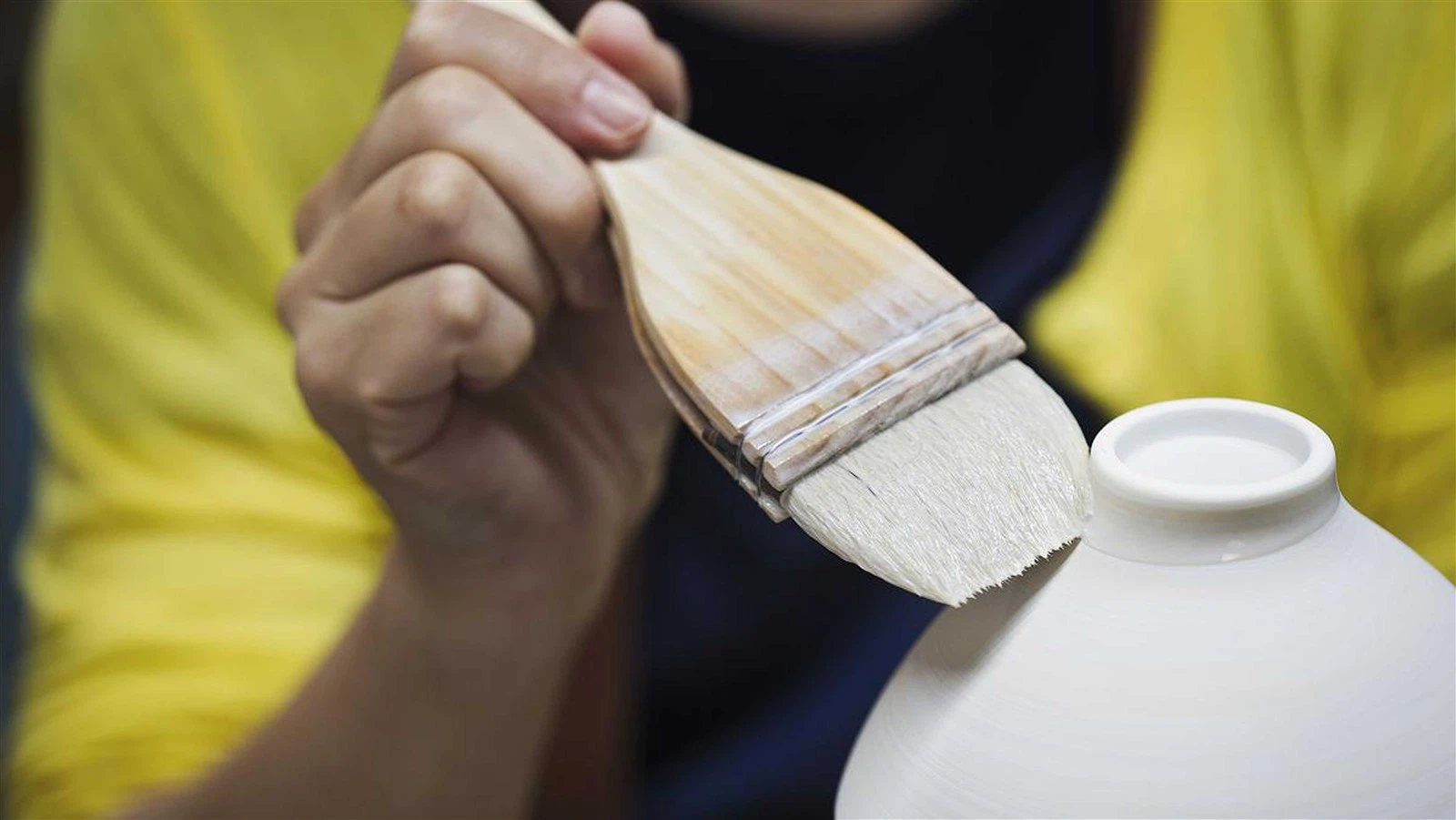
Brushing glaze, also known as "glazing", is to use a brush to dip the glaze slurry and apply it on the blank. This method was first seen in the primitive porcelain of the Qin and Han dynasties. It is mostly used for angular objects, or for partial glazing and glazing of the mouth, shoulder, bottom, etc., as well as applying several different glazes on the same blank.
Spraying glaze

Spraying glaze is also known as blowing glaze. The glaze spraying process is mainly to increase the thickness of the glaze layer and make up for the thickness limit of the body absorbing glaze during the glazing process. Spraying glaze should be the last step in the glazing process. The thickness of the glaze layer should be increased on the basis of ensuring the flatness of the glaze surface. Therefore, this method places the pottery to be glazed on the turntable. While the craftsman rotates the turntable regularly, he sprays the glaze slurry directly on the pottery with a sprayer, and the glaze surface of the previous glazing is basically dry before spraying the glaze again.
Pouring glaze & pouring glaze
Glazing glaze can create a special effect with a sense of flow. It is a glazing method widely used by our ancestors, especially in the three-color glaze of the Tang Dynasty. Craftsmen often pour several different colored glazes on the pottery blank, or use the technique of splashing, or use different thicknesses of glaze layers, or pour small particles of unground porcelain stone on the glaze surface of the body to form a star-shaped effect, thereby creating a unique interest.
Wheel glaze

Wheel glaze is mostly used for flat objects such as plates and dishes. The body is placed on a rotating windlass cart. When it rotates, the craftsman uses a bowl or spoon to scoop the glaze slurry and pour it on the center of the body. Due to the centrifugal force, the glaze slurry is evenly spread, so that the product is glazed with a uniform thickness, and the excess glaze slurry is thrown out of the body. Strictly speaking, wheel glaze is a type of pouring glaze.